Rule 4 Deductions in British Racing
The Tattersalls deduction table explained: what non-runners mean for your win and each-way bets, how to calculate your return, and which settlement details to check.
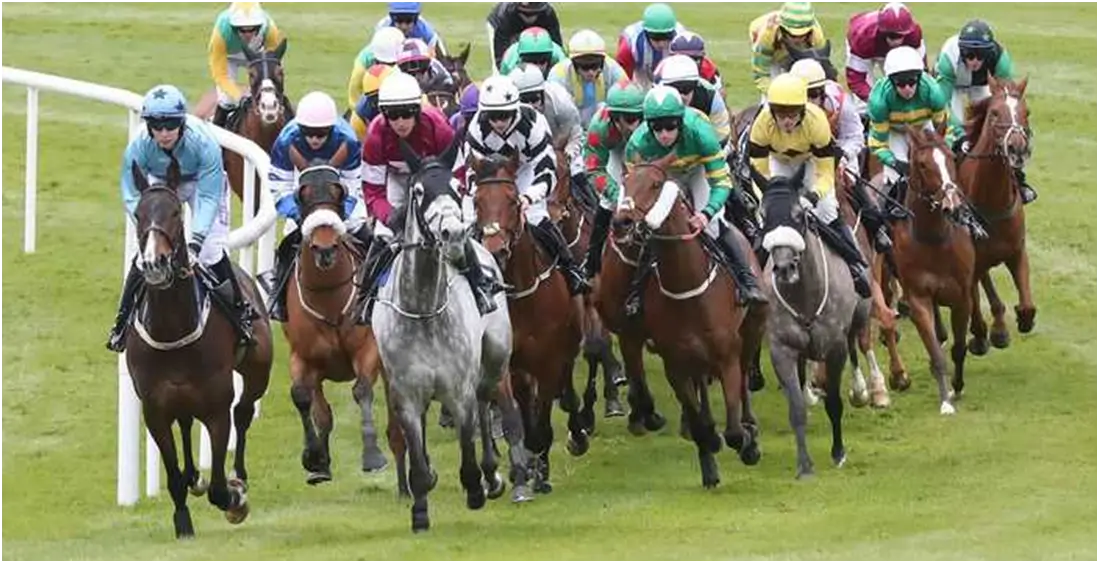
Horse racing photography from TipsterChallenge’s existing image library.
Rule 4 in 30 seconds
A Rule 4 deduction reduces profit on affected bets when a horse is withdrawn from a race. The deduction follows the withdrawn horse’s relevant odds—not the price of your selection. [2]
- 20p in the pound means 20% of profit, rather than 20% of the entire return.
- A normal winning cash stake is added back after the deduction.
- A refund on the non-runner and a deduction on other horses are different settlement events.
What is Rule 4 in horse racing?
Usually called Tattersalls Rule 4(c), it addresses a changed betting market after a withdrawal. Removing a runner removes a rival from the remaining horses. A bookmaker can offer revised prices for new bets and adjust affected earlier bets rather than pay the original profit unchanged. [2]
The rule applies to betting settlement; it does not decide the race result. In the usual post-declaration, non-runner-no-bet market, someone who backed the withdrawn horse receives their stake back. Someone who backed a remaining runner may face a deduction if that bet wins or earns a place return. A horse officially declared not to have started must also be distinguished from one that starts and simply performs badly. [6]
Rule 4 deduction table: the Tattersalls scale
Use the price of the withdrawn horse in the applicable market. This table presents the published fractional bands in ascending numerical order within each band. [4]
| Non-runner’s fractional odds | Deduction per £1 | Profit removed |
|---|---|---|
| 1/9 or shorter | 90p | 90% |
| 2/17 to 2/11 | 85p | 85% |
| 1/5 to 1/4 | 80p | 80% |
| 2/7 to 3/10 | 75p | 75% |
| 1/3 to 2/5 | 70p | 70% |
| 4/9 to 8/15 | 65p | 65% |
| 4/7 to 8/13 | 60p | 60% |
| 4/6 to 4/5 | 55p | 55% |
| 5/6 to 20/21 | 50p | 50% |
| Evens (1/1) to 6/5 | 45p | 45% |
| 5/4 to 6/4 | 40p | 40% |
| 8/5 to 7/4 | 35p | 35% |
| 9/5 to 9/4 | 30p | 30% |
| 12/5 to 3/1 | 25p | 25% |
| 16/5 to 4/1 | 20p | 20% |
| 9/2 to 11/2 | 15p | 15% |
| 6/1 to 9/1 | 10p | 10% |
| 10/1 to 14/1 | 5p | 5% |
| Over 14/1 | None | 0% |
These are published fractional-price bands, not a decimal-price interpolation tool. For an unusual decimal quote or a price between listed bands, consult the bookmaker’s own applicable scale. Exactly 14/1 appears in the 5p band; over 14/1 has no standard deduction.
How to calculate Rule 4 deductions
Separate profit from total return. Fractional odds describe profit relative to stake; decimal odds describe total return relative to stake. For an ordinary winning cash single:
Worked example: £10 win at 6/1, with a 20p deduction
- Original profit: £10 × 6 = £60.
- Deduction: £60 × 20% = £12.
- Adjusted profit: £60 − £12 = £48.
- Add the £10 cash stake: £58 total return.
Taking 20% off the original £70 return would produce £56, which is the wrong calculation for this example: it would also deduct from the stake. The equivalent adjusted fractional profit odds are 4.8/1, or decimal odds of 5.80.
Worked examples are original illustrations, not reported bets. They exclude dead heats, bonus stakes, commission, promotional enhancements and operator-specific rounding.
Rule 4 calculator for winning cash singles
Enter your stake, fractional odds taken and the deduction confirmed for your bet. This estimates a winning win-single return; it does not determine whether a deduction applies.
Cash stakes only. The displayed result assumes the selection wins outright. Each-way bets, free bets, dead heats, exchanges and accumulators require their own calculation. Figures are rounded for display to two decimal places.
Rule 4 on each-way bets and place terms
An each-way bet consists of a win stake and a place stake. A deduction can reduce profit on both successful parts. Separately, fewer starters may change the place fraction or number of places under the relevant terms. [2]
Under standard Tattersalls place terms, a handicap dropping from 16 starters to 15 moves from four places at quarter odds to three places at quarter odds. Extra-place offers can operate differently, so the advertised promotion must be checked. Losing a paid place is a separate issue from the Rule 4 percentage. [1] [5]
Worked example: £10 each way at 10/1
Total outlay: £20. Assume one-fifth place odds, a 20p deduction on each successful part and unchanged place terms.
- If the horse wins: win part returns £90 (£80 profit + £10 stake). Place part returns £26 (£16 profit + £10 stake). Combined return: £116; net profit against £20 outlay: £96.
- If the horse only places: the win stake loses; the place part returns £26. Net profit against the full £20 outlay: £6.
Withdrawal timing and multiple non-runners
A bet struck after a market has been reformed for a non-runner normally already reflects that withdrawal. It should not simply inherit the earlier market’s deduction. A later withdrawal can create a fresh adjustment. With several withdrawals, the correct market history matters; adding percentages taken from unrelated betting shows can misstate the deduction. [3]
Tattersalls distinguishes bets in the original market from those in a reformed market. For withdrawals spanning markets, original-market bets use the relevant original-market prices, while bets placed in reformed markets use prices applicable there. Combined deductions cannot exceed 90p per £1. [1]
Worked example: two withdrawals in the same market
Suppose the relevant withdrawn prices are 4/1 and 6/1. Their deductions are 20p and 10p, totalling 30p. A £10 winning bet at 8/1 has £80 original profit. After £24 is removed, £56 profit remains; add the £10 stake for a £66 return.
This assumes both withdrawals affect the same bet and the quoted prices are the correct settlement prices. It is not a shortcut for a race with several reformed markets.
Starting Price, ante-post and exchange betting
Does Rule 4 apply to SP bets?
Usually a newly formed Starting Price already reflects the remaining field. However, a sufficiently late withdrawal can still lead to an SP deduction where a new market could not be formed. Avoid the blanket assumption that “SP can never have Rule 4”. [1]
Ante-post and non-runner-no-bet are different
Ordinary all-in ante-post bets usually avoid standard Rule 4 but carry non-participation risk: backing a horse that does not run can mean losing the stake. An early bet is not necessarily ante-post; identify the market terms accepted. Non-runner-no-bet protects against the selected horse not running, but does not automatically protect bets on other horses from deductions. [5]
Best Odds Guaranteed
BOG does not automatically erase Rule 4. The bookmaker’s eligibility rules and settlement comparison still matter. Sky Bet’s guidance explains its comparison with SP, including the possibility that SP itself carries a deduction. Check the actual offer rather than compare the headline early price with SP in isolation. [3]
Betfair Exchange reduction factors
The Exchange uses market-specific reduction factors, not this bookmaker table. In its win market, reductions act on matched decimal prices; in its place market, they act on potential profit. The thresholds and factors also differ between markets. [7]
For example, Betfair’s published win-market method turns decimal odds of 8.00 into 6.00 with a 25% factor. A bookmaker-style 25% profit deduction at 8.00 would instead give 6.25. Similar terminology does not make the two calculations interchangeable.
Rule 4 on doubles, trebles and accumulators
Apply the deduction to the affected leg’s profit odds before multiplying the leg returns. Do not automatically deduct that percentage from the entire accumulator. A non-runner among your own selections is a separate void-leg issue under the accepted bet’s rules. [6]
Worked example: a £10 winning double
Leg A is 5/1 with a 20p deduction: its profit odds become 4/1, or 5.00 decimal. Leg B wins at 2/1, or 3.00 decimal, with no deduction.
Return = £10 × 5.00 × 3.00 = £150. Net profit is £140. Taking 20% from the original £180 total return would give £144 and would be wrong for these assumptions.
For Lucky 15s, Yankees and other combination bets, identify the individual lines containing the affected race; unaffected lines do not inherit that race’s deduction. Treat win and place accumulations separately for an each-way multiple.
Free bets and dead heats
A stake-not-returned free bet cannot be calculated by simply adding the token value back like cash. Dead heats also change the stake allocation. Use the relevant offer and dead-heat rules before checking deductions; the simple calculator above intentionally excludes both.
How to check a Rule 4 settlement
Build a short record of the transaction before querying a payout:
- Save the bet receipt, acceptance time, price taken and market type.
- Identify the non-runner, withdrawal time and the price used for the deduction.
- Check whether your bet belongs to the original or a reformed market.
- Separate profit from returned stake and calculate each affected leg.
- For each-way bets, verify the final place terms and any extra-place offer.
- Ask the operator to explain the rate, timing, market and arithmetic if they differ from your records.
The Gambling Commission has emphasised clear Rule 4 terms and fair treatment. Its guidance also highlights price integrity and operators’ controls. That is a reason to request a transparent calculation—not to assume every difference in payout is necessarily an error. [8]
Abandoned racing is a separate issue
If the entire race is abandoned, standard non-ante-post bets are generally void rather than settled by inventing deductions for every horse. Postponement and ante-post conditions need separate checks. [1]
Rule 4 deductions: frequently asked questions
What is a Rule 4 deduction in British horse racing?
It is an adjustment to winnings on affected bets after another horse is withdrawn. The withdrawn horse’s relevant price determines the deduction, expressed in pence per pound of profit. See the deduction table and timing section above.
Does Rule 4 take money from my stake?
For a normal cash winning single without a dead heat, Rule 4 reduces profit, not the returned stake. A £10 winning bet at 6/1 with a 20p deduction returns £58: £48 adjusted profit plus the £10 stake.
What does a 20p Rule 4 mean?
It means 20% is removed from the affected profit. It does not mean that only 20% of your winnings are paid, and it is not a 20% reduction of the entire return including stake.
Does Rule 4 apply to each-way bets?
It can affect the profits on both the win and place parts. The number of places or odds fraction may also change after withdrawals; use the applicable bookmaker terms.
Does Rule 4 apply to Starting Price bets?
Usually the revised SP already reflects withdrawals. An exceptionally late withdrawal may still produce an SP deduction if there was insufficient time to form a new market.
What is the maximum Rule 4 deduction?
Combined deductions are capped at 90p per £1 of profit under the standard Rule 4 scale. The cap does not turn a losing bet into a refund.
Is a non-runner refund the same as Rule 4?
No. A refund concerns a bet on the withdrawn horse. Rule 4 concerns affected bets on horses remaining in the race. Ante-post and specialist markets can have different refund rules.
Sources and editorial methodology
This guide was written by Richard de Rothschild of TipsterChallenge.com, using the Tattersalls rules, published operator guidance and Gambling Commission material. Sources were checked on 23 October 2026. The linked Tattersalls PDF identifies its revision date as 17 May 2010; it is not labelled here as a new 2026 edition.
Examples and the calculator are original arithmetic illustrations. Bookmaker concessions are identified as operator-specific. Where terms differ, the actual market and accepted bet conditions must be consulted.
- Tattersalls Committee — Rules on Betting (PDF; revised 17 May 2010)
- William Hill — Rule 4 Deduction: Explained
- Sky Bet — Rule 4 Deductions
- Chisholm Bookmakers — Betting Shop Rules, section 1.10
- Sky Bet — Horse Racing Settlement Queries
- William Hill — UK and Irish Horse Racing Rules
- Betfair — Exchange Horse Racing Rules
- Gambling Commission — Important lessons for the betting industry on Rule 4 application
Independent educational article. Source links do not imply endorsement by any bookmaker, regulator or racing body. This page contains no bookmaker affiliate links.